Choosing Bagasse Food Packaging: A Strategic Buyer's Framework
Summary Key Takeaways for Importers
- Breathable fiber walls prevent condensation build-up, keeping crispy delivery food crunchy
- Dual snap-lock clamshells eliminate messy spills in courier transit
- Multi-compartment trays reduce packaging unit counts per meal order
- Always request physical production samples to test with your actual hot food recipes
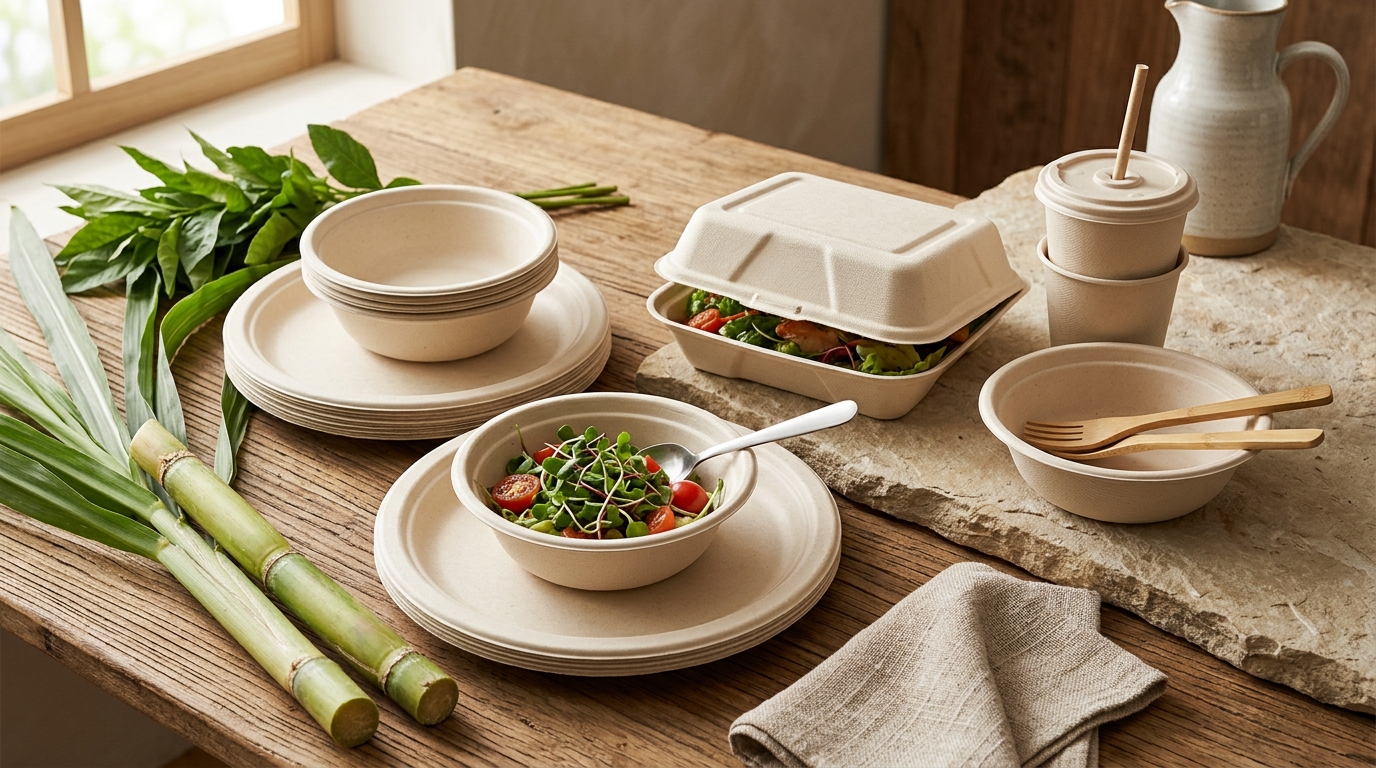
Switching from conventional petroleum-based packaging (EPS foam, polypropylene, or PET) to sugarcane bagasse involves key functional decisions that impact kitchen assembly speed, delivery performance, and overall procurement costs.
Consideration 1: Thermal & Moisture Requirements: Unlike plastics that trap steam and cause fried food to become limp and soggy, molded fiber is naturally micro-porous. It breathes sufficiently to preserve the crunch of fried chicken, burgers, and pastries, while retaining adequate heat. If your menu features high-liquid curries or boiling broths, look for deep-rim bowls with matching tight-sealing lids.
Consideration 2: Delivery Transit Dynamics & Stacking: For cloud kitchens utilizing motorbike delivery networks, container structural integrity under vertical load is paramount. Hinged clamshell boxes with reinforced diagonal ribbing on top and bottom walls prevent box collapse when delivery couriers stack 4 or 5 orders inside an insulated thermal backpack.
Consideration 3: Compartmentalization vs. Versatility: Multi-compartment plates and containers save significant labor and packing material costs by eliminating the need for separate side containers for sauces, dips, and salads. However, single-compartment formats provide greater menu versatility across shifting seasonal offerings.